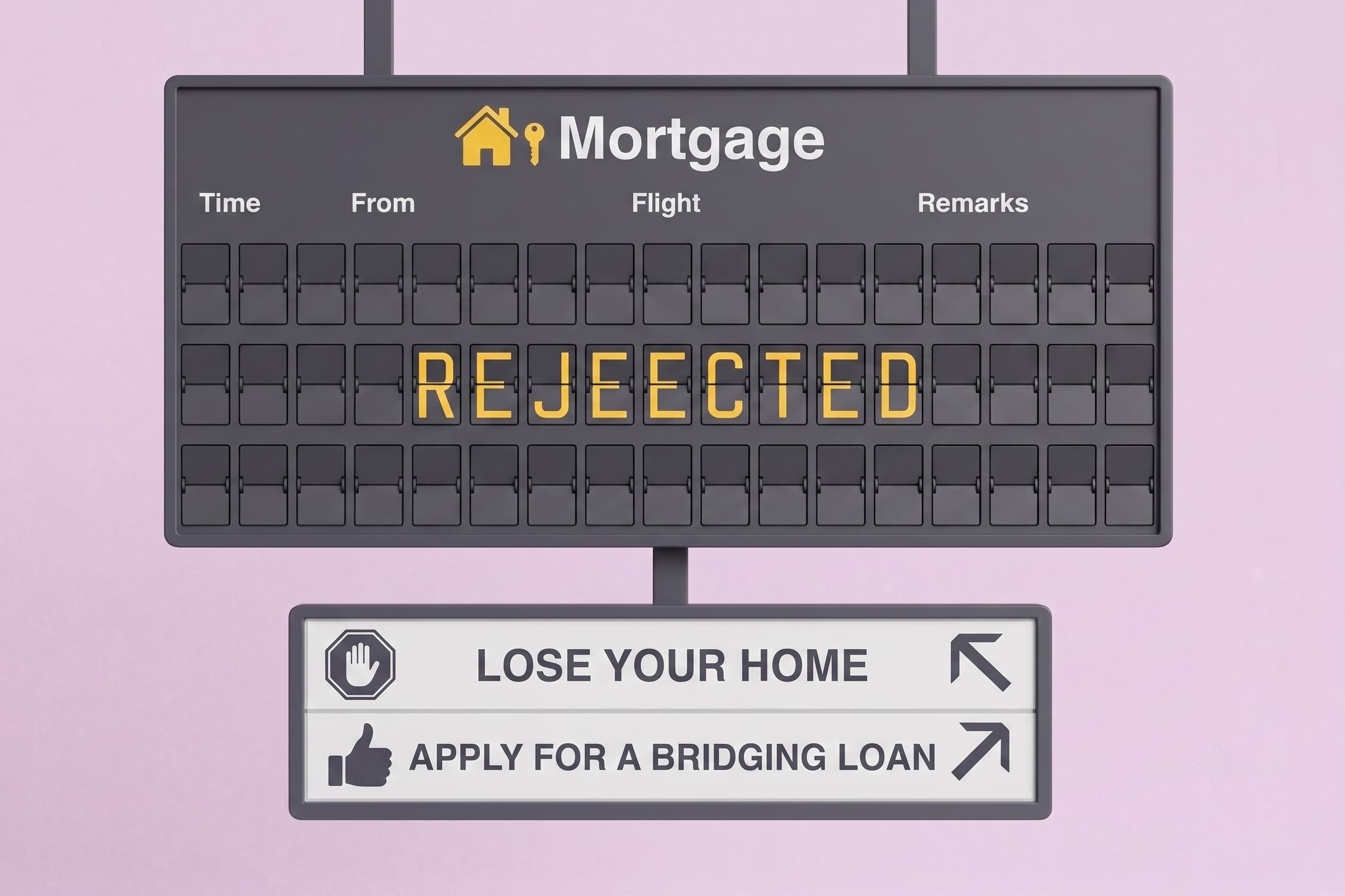

Mortgage Offer Expires Before Completion? Here Is What to Do
A mortgage offer can expire before you complete a property purchase. What happens next depends on whether you have exchanged contracts:
- Before exchange: Ask about an extension or new application, or consider withdrawing.
- After exchange: Check the contract deadline, notice period, and deposit terms with your conveyancer.
In this article, we will guide you through the next steps to take if your mortgage offer expires.
You will also learn how bridging finance can help keep your property purchase moving forward, especially if you are short on time.
How long does a mortgage offer last?
In the UK, most mortgage offers remain valid for about 3-6 months.
The exact length depends on your lender and mortgage type. Some specialist buy-to-let offers are shorter, while new-build offers can last longer to allow for changes in construction or completion dates.
The offer period usually begins on the date your lender issues the offer, so check your offer letter to find the exact expiry date and any special conditions.
Even if your offer lasts a long time, it does not mean you will get an extension if your purchase is delayed. If you think there might be a delay, ask your lender early about how to get an extension, especially for new builds or if legal work is still in progress.
What the expiry date means depends on whether you have exchanged contracts.
- Before exchange, an expired offer does not usually force you to complete. You can ask for an extension, apply again, or decide not to proceed.
- After exchange, the purchase is legally binding, and you are usually expected to complete on the agreed date even if the offer has expired.
What happens if the offer expires before you exchange?
If your mortgage offer expires before you exchange contracts, you are usually not legally required to complete the purchase.
You can ask for an extension, apply for a new offer, or decide whether to continue. Here are some steps to help you:
- Check the expiry date first. Your mortgage offer letter will show this, along with any conditions.
- Talk to your broker or lender as soon as possible. Some lenders only accept extension requests during a certain period before the offer expires.
- Ask what information they need. You may need to provide updated documents, and the lender might recheck your income, expenses, credit, the property, or its valuation.
- Find out how long the process could take. A simple extension might take a few days, but a full reassessment can take several weeks.
- If you cannot get an extension, ask about making a new application. The original mortgage might not be available, rates or fees may have changed, and you might have to pay some costs again.
What happens if the offer expires after you exchange?
After exchange, the purchase becomes legally binding. This means you are usually expected to complete on the agreed date, even if your mortgage offer has expired.
If you cannot complete on time, the seller may be able to take action. This could mean extra costs, delays, or, in the worst case, losing your deposit.
One key point is the notice to complete. If you miss the completion date, the seller may serve this notice if they are ready to proceed. Under the Standard Conditions of Sale, the notice period is usually 10 working days, not including the day it is served. Your contract may say something different, so ask your conveyancer to check.
You should ask your conveyancer:
- What the completion deadline is
- How long the notice period would be
- Whether you would pay daily compensation for being late
- What happens to your deposit if you cannot complete
- Whether you could owe more if you paid less than a 10% deposit
- Whether the seller could claim further losses
New-build purchases can be more complex, especially because the completion date may depend on when the property is ready. Ask your conveyancer to explain any completion-on-notice terms or long-stop dates, so you know when you may be required to complete.
If your offer is close to expiring, speak to your broker, lender and conveyancer as soon as possible. They can explain whether an extension, a new mortgage offer, or another funding option may be possible.
If the mortgage cannot meet an investment purchase deadline, bridging finance may help cover the gap while you arrange longer-term funding. It is short-term secured borrowing and depends on the property, deadline and repayment route.
What to do if the offer is close to expiry or has already expired
If your mortgage offer is close to expiring or has already expired, the right steps will depend on whether you have exchanged contracts. Contact your lender, broker, and conveyancer as soon as possible.
Use the checklist below to help you keep your funding and contract timelines on track:
- Check the expiry date and the process for requesting an extension in your mortgage offer letter.
- Ask your lender if the offer can be extended, what documents are required, and whether the rate, valuation, or any fees might change.
- Ask your conveyancer what work remains and whether completion can happen in time.
- If you have exchanged, ask your conveyancer to confirm the deadline, notice period and deposit terms.
- If an extension is refused, ask what a fresh application means for timing and costs before applying again.
You may also want to ask if your conveyancer can request the mortgage funds in advance and hold them until completion. Whether this is possible depends on your lender and the details of your transaction.
If your new mortgage application is declined, do not worry. The next steps will outline what you can do next to keep your purchase on track.
When could bridging finance cover the gap?
Bridging finance is worth keeping in mind if your mortgage offer will not be ready in time and you still want to complete an investment or let purchase.
It is usually not the first option, so start with the standard routes first:
- Ask the lender whether the offer can be extended
- Check if a new mortgage offer can be issued
- See whether a fresh mortgage application can be completed in time
- Speak to your conveyancer about the contract deadline and any risks
If those options are not available, or the deadline is too tight, bridging finance may help cover the gap. It can provide short-term funding so you can complete the purchase while arranging longer-term finance, such as a buy-to-let mortgage.
This may be useful if:
- You have already exchanged contracts
- Your completion deadline is approaching
- Your mortgage extension or new application will not be ready in time
- You risk late completion costs or losing your deposit
- You have a clear plan to repay the bridge
Bridging finance is secured borrowing and usually costs more than a standard mortgage. You will need a clear repayment plan, often called an exit strategy. For example, you could refinance onto a buy-to-let mortgage after completion.
In short: Try the standard mortgage routes first. But if completion is at risk and you have a clear exit plan, bridging finance may be an option to keep the purchase moving.
Check the contract and funding date before you decide.
Before considering short-term finance, confirm the exact deadline with your conveyancer, including the completion date, notice period, and any costs if funds are late.
You should also check whether you can arrange funding in time. This will depend on the property, valuation, legal work, lender requirements, and your repayment plan.
We provide bridging finance for eligible investment purchases in England and Wales, and we can complete in as little as 10 days.
Before applying, confirm the contract terms, total cost, and exit route with your conveyancer and adviser. Having these details ready can help speed up the drawdown process.
If you need bridging finance to cover the gap between your mortgage offer and completion, check our loan terms before you apply:
GoGoProp lends under Money Lending Licence No. 1341/2025.
Key takeaways
- Check the expiry date and extension terms in your offer letter.
- Before exchange, ask about an extension or new application, or consider withdrawing.
- After exchange, the contract may still require you to complete.
- Ask your conveyancer to confirm notice periods, deposit terms and likely costs.
- Bridging may fit an investment purchase only when the deadline, cost and exit work.
Frequently asked questions
1. Can a lender withdraw a mortgage offer before completion?
Yes. A lender may withdraw an offer before completion under its terms or if your circumstances or the property change. Ask your lender what applies to your offer.
2. Can a mortgage offer be extended after exchange?
Possibly. It depends on the lender and your case. Because you may already be bound to complete, speak to your broker, lender and conveyancer straight away.
3. Can a mortgage advance be requested before completion?
Sometimes. Your conveyancer can ask the lender to release funds early, but this depends on the lender's rules and the transaction.
4. Does an expired offer mean I have to make a new application?
Not always. The lender may consider an extension or reinstatement, but it may require a new application. Confirm what it will accept before applying again.
5. Can bridging finance arrive within a notice-to-complete period?
It may be possible, but valuation and legal work take time. Check the deadline with your conveyancer and lender before relying on bridging finance.